

- You have no items in your shopping cart
- Subtotal: $0.00
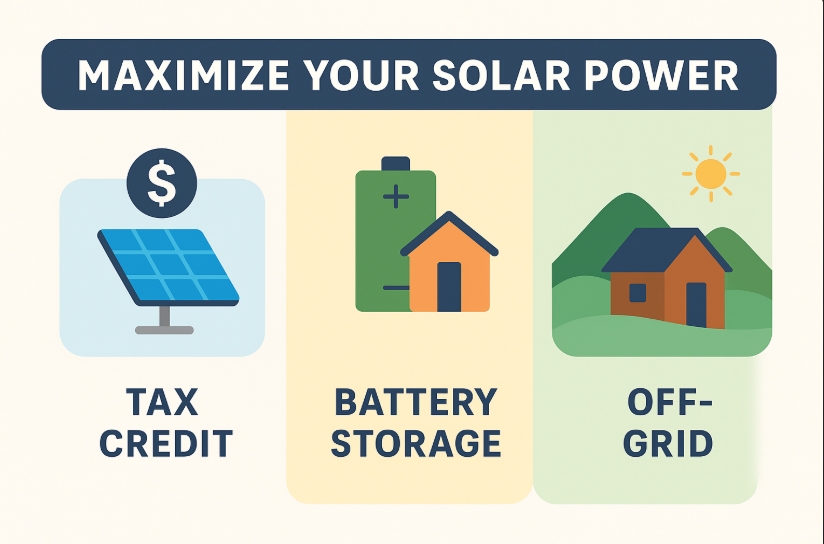
Solar Tax Credits: Installing solar panels is a powerful step toward energy independence and sustainability—but there’s more to the story. If you want to get the most value from your solar power system, it’s crucial to understand:
- 💸 How solar tax credits reduce your costs
- 🔋 Why battery storage is a game changer
- 🌄 What it takes to go completely off-grid
In this guide, we break down how each element can make your solar setup more efficient, resilient, and financially rewarding.
🧾 Solar Tax Credits & Incentives: Save Big Upfront
One of the biggest advantages of solar adoption is the availability of generous government incentives that drastically reduce installation costs.
🔹 1. Federal Investment Tax Credit (USA)
The Investment Tax Credit (ITC) is a major U.S. incentive that lets you deduct 30% of your solar installation cost from your federal income taxes.
What’s covered?
- Solar panels
- Inverters
- Mounting hardware
- Wiring
- Battery systems (if charged via solar)
Example:
If your solar project costs $18,000, you can deduct $5,400, reducing your net cost to $12,600.
Eligibility:
- Residential or commercial
- You must own (not lease) the system
- Credit rolls over if not fully used in one year
🔹 2. State & Local Incentives
Many states and cities offer additional savings:
- Rebates: Upfront cash discounts (e.g., California’s SGIP for batteries)
- Net Metering: Sell excess power back to the grid at retail rates
- Property Tax Exemptions: Avoid increased property taxes for solar
- Sales Tax Exemptions: Don’t pay sales tax on solar equipment
Tip: Visit DSIREusa.org to explore incentives in your zip code.
🔹 3. Global Examples
- Germany: Feed-in tariffs pay homeowners for solar power exported to the grid
- Australia: STCs and solar rebates reduce costs nationwide
- India: Up to 40% capital subsidy for residential solar
- UK: Smart Export Guarantee (SEG) pays for solar exports
🔋 Pairing Solar Panels with Battery Storage
Rooftop solar is great, but what happens at night or during an outage? That’s where solar battery storage comes in.
🔹 What is a Solar + Battery System?
How It Works:
- Solar panels generate electricity
- Power is used in your home first
- Excess is stored in the battery
- At night or during outages, the battery supplies power
🔹 Top Benefits of Solar Batteries
- ✅ Backup during grid outages
- ✅ Maximize use of solar power
- ✅ Reduce or eliminate time-of-use (TOU) peak charges
- ✅ Greater energy independence
🔹 Common Battery Types
| Battery Type | Pros | Cons |
|---|---|---|
| Lithium-ion | Long life, high efficiency | Expensive upfront |
| Lead-acid | Affordable | Short lifespan, heavy |
| Saltwater | Non-toxic, eco-friendly | New tech, limited options |
🔹 Example Systems
- Tesla Powerwall 2: 13.5 kWh, seamless backup, smart monitoring
- LG Chem RESU: Popular in hybrid systems
- Sonnen Eco: Modular, smart grid-ready, premium build
- Sunlith Energy: Modular Solutions
📊 Cost of Battery Storage
| Battery System | Capacity (kWh) | Installed Cost (USD) |
|---|---|---|
| Tesla Powerwall 2 | 13.5 | $9,000 – $13,000 |
| LG Chem RESU 10H | 9.8 | $7,500 – $10,000 |
| EcoFlow Delta Pro | 3.6 (expandable) | $3,000 – $8,000 |
Remember, battery costs are eligible for the 30% federal tax credit if they’re installed alongside solar panels.
🌄 What About Going Completely Off-Grid?
🔹 What Is an Off-Grid Solar System?
An off-grid solar system is not connected to the public utility grid. It relies 100% on solar generation and battery storage, often supplemented by a backup generator.
🔹 Core Components
- Solar panels
- Charge controller
- Deep cycle battery bank
- Hybrid inverter
- Backup generator (diesel or propane optional)
🔹 Who Should Consider Off-Grid?
- Remote areas with no grid access
- Homesteads or cabins
- Eco-conscious individuals seeking full independence
- Preppers or survivalists
🔹 Pros of Off-Grid Systems
- 🌐 Total energy independence
- 💡 Power during blackouts
- 🔋 No monthly utility bills
- 🌱 Lower carbon footprint
🔹 Cons
- 💸 Higher upfront cost (especially batteries)
- 📉 No net metering or grid backup
- 📊 Requires precise energy usage planning
- 🛠 Ongoing maintenance for reliability
🧠 Real-World Examples
🏠 Case Study 1: Grid-Tied + Battery Backup
Location: Austin, Texas
System:
- 6.5kW solar panels
- Tesla Powerwall 2
- Grid-tied with outage protection
Outcome:
- $0 grid bill 10 months a year
- Full backup for fridge, internet, lights during storms
- ROI expected in 8 years
🌲 Case Study 2: Remote Off-Grid Cabin
Location: Montana wilderness
System:
- 5kW solar
- 15kWh lithium batteries
- Diesel generator for emergencies
Outcome:
- No access to grid; lives fully off solar
- Winter demands require careful power use
- Self-sufficient, sustainable lifestyle
💬 Final Thoughts
Solar energy becomes dramatically more powerful when paired with tax incentives, batteries, or an off-grid setup. Here’s a quick summary:
| Strategy | Key Benefit | Ideal For |
|---|---|---|
| Tax Credits | Lowers initial investment | All solar adopters |
| Battery Storage | Backup + time-shifted energy usage | Homes with outages or TOU rates |
| Off-Grid Systems | Full independence | Remote locations, self-reliance |
💡 Pro Tip: Use a certified solar installer who understands incentives, storage options, and grid requirements for your area.


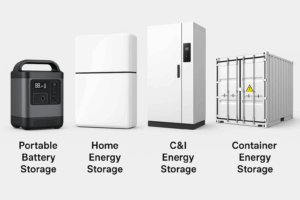
[…] generate sufficient power, solar systems need adequate roof or land […]
[…] Sustainability – Supports renewable energy by storing excess solar and wind power. […]